Embed energy literacy in primary school learning
 Uludağ Enerji
 SKD Türkiye
Summary
Primary school children learn energy saving and electrical safety through virtual reality, shadow theatre and age-specific materials delivered inside their classrooms.
Context
Submitted through the COP31 Sustainable Transformation Awards · SKD Türkiye (WBCSD Global Network Partner)
Uludağ Enerji is an electricity distribution and retail supply company serving Bursa, Balıkesir, Çanakkale and Yalova, with more than 1,000 employees.
Energy saving and electrical safety are normally communicated to adults, at the point where habits are already formed and where a leaflet competes with everything else in the household. Children use electricity every day, encounter its hazards without recognising them, and receive little structured teaching on why consumption matters — yet material designed for adults does not hold their attention.
The company treats energy literacy as a long-term behaviour question rather than a seasonal communication exercise. The programme is run voluntarily, outside any legal obligation, on the basis that awareness formed in childhood travels into the household and into adult behaviour in a way that adult-targeted messaging does not.
It was launched in 2018 in cooperation with the Ministry of National Education, which is also the baseline year, and has run without interruption since. Educational content and implementation follow the approval mechanisms of the education authority, which supports transparency, accountability and institutional trust, and gives the programme access to the school system rather than to individual schools, and programme performance is carried into corporate sustainability and communication reporting.
Location of the initiative: Bursa, Balıkesir, Çanakkale and Yalova provinces, Türkiye
Solution
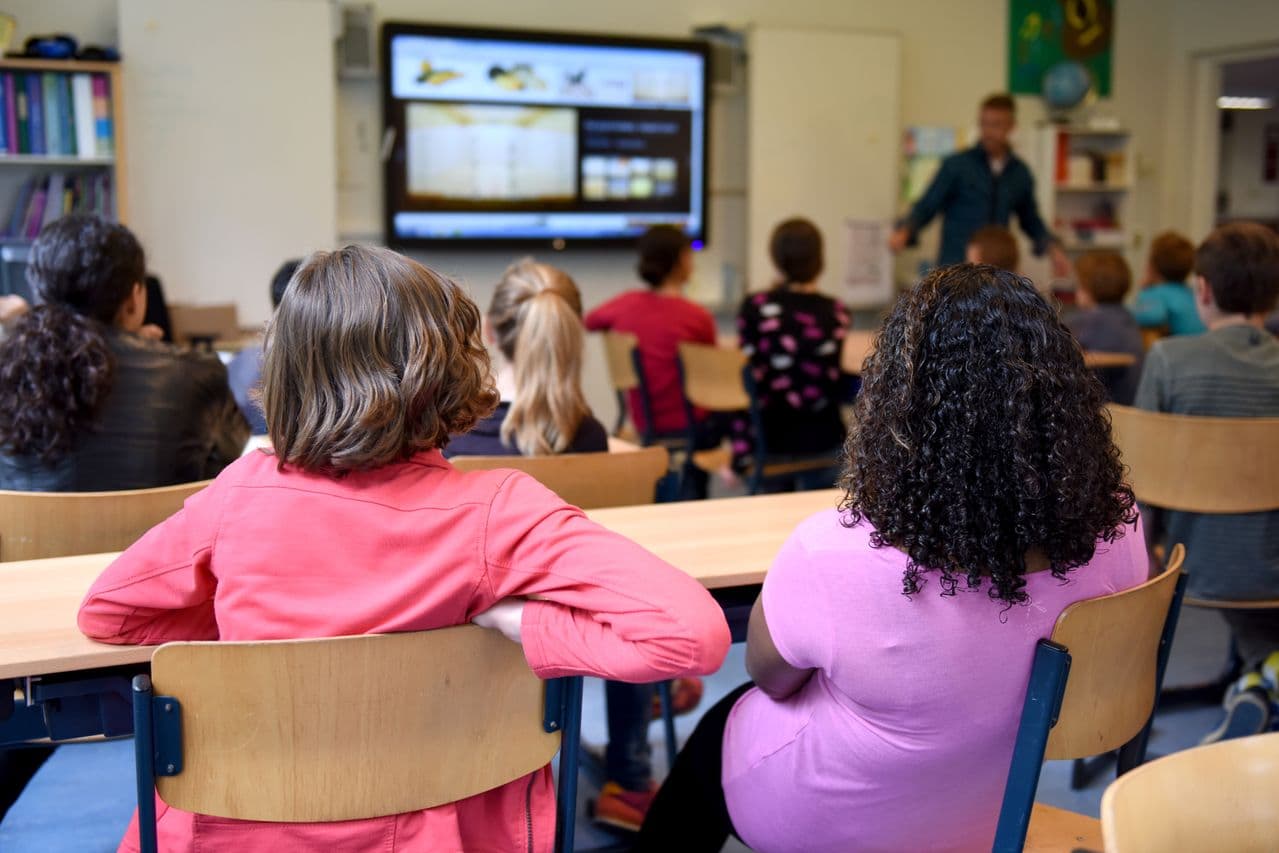
The programme teaches energy saving, energy literacy and safe use of electricity to primary school children through experience-based and interactive methods matched to their developmental stage, delivered in the classroom during the school day.
Content is differentiated by age band rather than simplified for everyone. Children aged 9-12 work with virtual reality, the Karagöz shadow puppet play, the Green Energy Platform, teaching presentations, and education and colouring books. Children aged 7-8 build basic awareness through the Karagöz shadow puppet play and an education and colouring book. Two age bands, two different pedagogies, the same underlying content.
Six learning formats are in use: virtual reality, the Karagöz shadow puppet play, presentation, book, poster and the Green Energy Platform. Pairing a digital format with a traditional cultural one is a deliberate design choice — the shadow play carries the message in a classroom with no equipment, while the virtual reality session gives a small group the experience of a hazard that cannot safely be demonstrated in real life.
Delivery is by the Energy Team within the Corporate Communications Directorate. The team combines three groups: communication professionals, university students and high school interns, so field capacity grows while young people gain experience in the energy and sustainability field.
Outside term time, events in shopping centres extend the programme to children together with their families, which is how the household is reached without addressing it directly.
Materials have been standardised into a corporate package, so that extending the programme to a new province is a matter of scheduling rather than redesign.
Figure 1: A pupil using the virtual reality module on energy saving and electrical safety

Figure 2: Students with the programme's education booklets after a session

Impact
Sustainability impact
Climate
The emissions effect of this programme is enabling rather than direct. It does not change the company's own Scope 1 or Scope 2 emissions, because the electricity it seeks to save is consumed in the households and schools the company supplies rather than in its own distribution and retail operations. The saving therefore sits downstream, in the use of the electricity delivered, and the company does not measure the electricity saved in the households and schools reached; the stated aim of the programme is to build awareness of energy saving and electrical safety from an early age.
The mechanism is behavioural and it works through children. Energy saving, energy literacy and safe use of electricity are taught to primary school pupils in the classroom, and the household is reached through the pupil and through the events held for children and their families outside term time. The company's reasoning is that awareness formed in childhood travels into adult consumption behaviour, which adult messaging at the point where habits are already fixed does not achieve.
The effect is anchored to a period rather than to a campaign. The baseline year is 2018 and delivery has been continuous since, reaching 548 schools and more than 70,000 students across Bursa, Balıkesir, Çanakkale and Yalova, with satisfaction at 96 per cent in the most recent survey. Each cohort carries the saving message into a household supplied from the same network, so the enabled effect accumulates year on year with reach.
Social
Since 2018 the programme has reached 548 schools and more than 70,000 students across the four provinces of Bursa, Balıkesir, Çanakkale and Yalova, running continuously on monthly and weekly planning rather than as an annual event.
Six areas are measured: 1. students and schools reached; 2. geographic coverage; 3. programme continuity; 4. digital media reach; 5. press reach and its diversity; 6. the satisfaction survey.
Digital media reach is 19,630,990. Press reach totals 7,497,371 across 16 television channels, 80 newspapers and 1,674 news websites.
Satisfaction was 96 per cent in the most recent survey, which is the closest available indicator of whether the sessions land with their audience.
Six learning formats keep the content accessible across different classroom conditions: virtual reality, the Karagöz shadow puppet play, presentation, book, poster and the Green Energy Platform.
The delivery team is itself a social outcome. High school interns and university students act as both implementers and learners in field delivery, gaining experience in the energy sector and in sustainability work, while company employees take part voluntarily and carry technical knowledge into the classroom.
Electrical safety content addresses a hazard children meet in daily life, which is a preventive health contribution alongside the energy saving objective.
Business impact
Benefits
Electrical safety education reduces the risk of accidents involving children on and around the distribution network, which is an operational as well as a social benefit for a network operator responsible for public safety in its licensed area.
Energy literacy supports demand-side saving among the households the company supplies, and children carry the message home in a way that direct customer communication rarely achieves.
The formal cooperation with the Ministry of National Education gives the company institutional legitimacy and access to the school system, which no purchased media channel could provide and which strengthens its standing with public authorities generally.
The Energy Team model doubles as a talent channel. University students and high school interns deliver in the field, gain sector experience and become candidates familiar with the company, while employee volunteering supports internal engagement.
Digital reach of 19,630,990 and press reach of 7,497,371 give the company sustained visibility across its service area at a cost structure closer to programme delivery than to advertising.
Costs
The programme is funded from a regular annual corporate social responsibility budget, which is what secures its continuity and marks it as a medium to long-term commitment rather than a campaign.
The cost base is virtual reality equipment and content production, the shadow puppet play production and performance, printed education and colouring books, posters, the Green Energy Platform, the Energy Team's time, and travel across four provinces on a monthly and weekly schedule. Data protection compliance adds a further requirement, since parental consent has to be obtained for photography of children.
Delivery cost scales with distance and with the number of sessions rather than with the number of children per session, so unit cost falls as class sizes and route density rise. Virtual reality is the exception: headset supervision limits group size, which caps how far that format can be scaled without buying more equipment.
Costs are contained by standardising materials into a corporate package that is reused across provinces, by staffing delivery with a mixed team of professionals, university students and interns rather than a fully professional field force, and by holding low-equipment formats alongside the technology-based ones.
The annual programme budget is TRY 3,500,000, which is about TRY 50 per student reached.
Impact beyond sustainability and business
Co-benefits
Using the Karagöz shadow puppet play brings a traditional performing art to a generation that would otherwise be unlikely to encounter it, so a cultural heritage benefit sits alongside the educational one.
Teachers gain material on energy and electrical safety that the school curriculum does not otherwise supply, and school managements gain a structured external session that fits the academic calendar.
Families are reached indirectly through their children and directly through the shopping centre events outside term time.
High school interns and university students obtain field experience, public speaking practice and exposure to the energy sector at an age when career direction is still open.
Potential side-effects
The measurement stops short of the outcome. Students reached, schools covered and satisfaction scores describe delivery and reception; they do not show a change in household electricity consumption or in accident rates. Behaviour change over time remains the programme's assumption rather than its evidence, and closing that gap would require follow-up measurement the programme does not currently carry.
Implementation processes are carried out within the scope of official cooperation with the Ministry of National Education. Collaborations with schools, implementation planning, and alignment with the academic calendar are conducted in coordination with relevant institutions; implementations are regularly evaluated based on field feedback received from school administrations and teachers. Programme results are reported within the framework of the institution's Activities and Corporate Social Responsibility, Communication Strategy, External Stakeholder Management, Public Relations, and Press and Digital Media Procedures, and integrated into corporate sustainability communication.
Virtual reality is the most attractive format and the least scalable one, because supervision and equipment limit group size. Relying on it too heavily would slow the programme down, which is why low-equipment formats are maintained in parallel.
Photographing children requires parental consent under data protection law, which adds an administrative step to every session and limits how field activity can be documented and communicated.
Implementation
Typical business profile
The model suits utilities and infrastructure operators with a defined service territory and a public-facing safety message — electricity, gas and water distributors, network operators and transport authorities — where the hazard being addressed is encountered by the public rather than only by employees.
It is most relevant for operators able to commit an annual corporate social responsibility budget over several years, because the value comes from continuity in the same schools and provinces rather than from a single campaign, and from a formal cooperation route into the national education system.
Delivery engages corporate communications, a dedicated field education team, human resources for the intern and student pipeline, and public relations working with the national education authority. Technical maturity requirements are modest; scheduling and content discipline matter more.
Approach
Sign a cooperation protocol with the education authority first: Agree school access, implementation planning and alignment with the academic calendar with the Ministry of National Education, because school-based delivery at scale depends on institutional access rather than on the goodwill of individual head teachers.
Split the audience by developmental stage: Define content separately for each age band — virtual reality, the shadow puppet play, the digital platform, presentations and books for children aged 9-12, and the shadow puppet play with an education and colouring book for children aged 7-8 — so that the same subject is taught twice rather than diluted once.
Pair a technology format with a low-equipment cultural one: Build both for the same content, so delivery does not fail in classrooms without space, power or equipment, and so the programme is not hostage to hardware availability.
Standardise the materials into a corporate package: Convert virtual reality content, presentations, visual materials, books and the digital platform into a fixed set, so a new province receives the same quality of delivery without redesign or renegotiation.
Staff delivery with a mixed team: Run field sessions through a dedicated team of communication professionals, university students and high school interns, so operational capacity grows at manageable cost while young people gain sector experience.
Extend beyond the school term: Deliver events in shopping centres outside term time so that children and their families are reached when schools are closed, which also brings the household into contact with the message.
Record in the field, consolidate monthly, report annually: Log schools, students, activities and geographic coverage immediately after each visit, consolidate the records monthly and report annually, and obtain parental consent for any photography in line with data protection law.
Close the loop with teachers and schools: Collect feedback from school managements and teachers on classroom suitability and age-appropriateness through site visits and observation, run a satisfaction survey, and revise the content on that basis rather than on internal judgement.
Stakeholders involved
Project leads: Senior management provides strategic backing and the programme runs within a formal cooperation framework with the Ministry of National Education, which gives it institutional legitimacy and a stable route into schools. Field implementation is led by the Energy Team within the Group Corporate Communications Directorate. A regular annual corporate social responsibility budget funds the programme, which is what allows it to be managed as a medium to long-term commitment integrated into corporate strategy rather than as a discretionary activity.
Company functions: Corporate communications owns content, materials and reporting. The Energy Team delivers in the field and records the data. Company employees participate voluntarily within the Energy Team, carrying technical knowledge from the network business into the classroom. Reach and participation data are recorded monthly in spreadsheets by the team, consolidated annually, and passed into corporate sustainability and communication reporting. Delivery follows the company's procedures for events and corporate social responsibility, communication strategy, external stakeholder management, public relations, and press and digital media, which is what keeps data management and stakeholder communication consistent across provinces.
Main providers: Virtual reality content and equipment, shadow puppet play production and performance, and the printing of education and colouring books are supplied by contracted production providers. Reach measurement uses a commercial social media business analytics platform and a commercial media monitoring service. The materials have been standardised into a corporate package, so the programme is not dependent on any single provider.
Other: The Ministry of National Education takes a directing role in school access, implementation planning and alignment with the academic calendar, which is what makes the programme accessible and sustainable within the public education system. School managements and teachers give feedback on classroom suitability and age-appropriateness through site visits and observation, and that feedback is used to develop the content. High school interns and university students act as both implementers and learners, taking an active role in field delivery while gaining experience in the energy sector and in sustainability. Families and local communities are reached through the children and through the shopping centre events, and shopping centre operators host those sessions.
Key parameters to consider
The baseline year is 2018 and the programme has run continuously since, on monthly and weekly planning through the year rather than in a single campaign period.
Two age bands and six learning formats define the content architecture, and they are the parameters another operator would need to reset for its own school system.
Reach is a function of the number of sessions and the size of the service territory. 548 schools and more than 70,000 students accumulated over consecutive years of uninterrupted delivery since 2018, which sets a realistic expectation of annual throughput for a four-province operation.
Field activity is monitored through the corporate record system and supported by visual documentation, with parental consent obtained for images in line with data protection law. The programme is reviewed and developed regularly on the basis of stakeholder feedback.
Implementation and operations tips
Secure institutional access before designing content. A protocol with the education authority determines whether the programme reaches 548 schools or a handful of willing ones, and no amount of material quality substitutes for it.
Do not let the most impressive format set the operating model. Virtual reality attracts attention but limits group size; the traditional shadow play is what allows a full class to be reached in a room with no equipment.
Build the delivery team so that it produces a second benefit. Staffing field sessions with university students and high school interns increases capacity, lowers cost and gives young people sector experience at the same time.
Record the data at the point of delivery. Monthly consolidation from field records is what makes reach figures comparable across years; reconstructing them afterwards would not.
Be clear that reach and satisfaction are not behaviour change. Stating the limit honestly keeps the reporting credible and identifies the follow-up measurement the programme still needs.