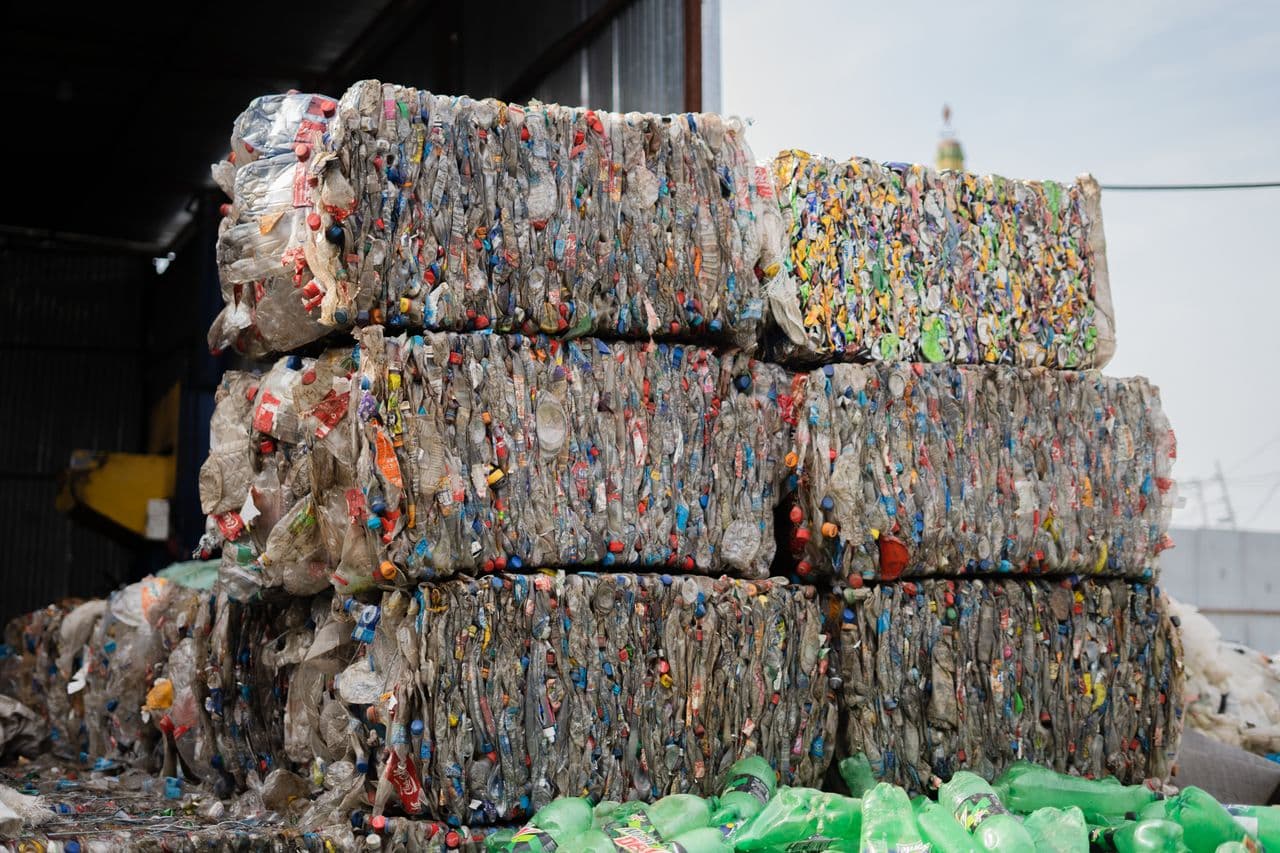
Turn post-consumer plastic waste into recyclable packaging
 Korozo Ambalaj
 SKD Türkiye
Summary
Household plastic waste re-enters hygiene packaging as certified recycled polyethylene, displacing virgin resin in a bag that stays recyclable as a single material.
Key resources
Context
Submitted through the COP31 Sustainable Transformation Awards · SKD Türkiye (WBCSD Global Network Partner)
The company is a flexible packaging manufacturer headquartered in Türkiye with more than 1,000 employees, producing printed polyethylene films and bags for international consumer goods manufacturers.
Wicket bags used for hygiene products carry demanding technical requirements. They have to run on high-speed automatic bagging equipment, protect the product through long export supply chains and maintain print quality. In this application, the key development challenge was to incorporate post-consumer recycled polyethylene into the existing mono-material PE structure while maintaining the required processing and product performance.
Two pressures converged on that product. Customers in the European Union began to ask for verified recycled content, and the European Union Packaging and Packaging Waste Regulation is progressively introducing requirements for packaging recyclability and recycled content.
Post-consumer material is the harder of the two recycled streams to work with. It originates in household collection, so polymer mix, colour, odour and mechanical consistency vary between deliveries, and the chain of custody from the waste holder to the converting plant has to be documented if a recycled-content claim is to survive external scrutiny.
The response, developed in 2024, was to treat recyclability and recycled content as a single design question rather than two separate ones: a mono-material polyethylene bag carrying 50 per cent certified post-consumer recycled polyethylene, taken into commercial production for an international hygiene products manufacturer.
Location of the initiative: Türkiye, with commercial supply into European Union markets
Solution
The product combines a mono-material polyethylene design with certified post-consumer recycled content. The PE structure is designed for compatibility with polyethylene recycling streams, while up to 50% of the polymer content is replaced with certified post-consumer recycled polyethylene.
The post-consumer route is what distinguishes the product. The feedstock originates in plastic waste collected after end consumer use, is reprocessed into a recycled polyethylene grade suitable for film extrusion, and is then converted into packaging for a hygiene application with high mechanical and hygiene requirements. The material therefore returns to a demanding, high-specification packaging application.
Because a post-consumer claim depends on where the material came from, the post-consumer origin of the recycled feedstock, the share of recycled content in the finished bag and the traceability of that material are independently verified under the RecyClass Recycled Plastics Traceability Certification scheme. The claim rests on audited chain-of-custody evidence rather than on supplier declaration alone.
Performance is assessed against a defined reference: the same bag built entirely from virgin polyethylene. That comparison is what allows the displaced virgin polymer volume to be stated, and it also sets the technical acceptance threshold, because the recycled-content structure has to match the reference on the customer's filling and packing lines before it can be approved.
The recycled-content level is a variable of the design rather than a fixed property, so the same structure can be produced at different recycled-content shares for different customers and product groups. The technical knowledge, process settings and quality verification method developed for the hygiene application form the basis for extending the approach to other polyethylene-based flexible packaging.
Figure 1: From collected post-consumer plastic to certified recycled resin, film extrusion and the finished mono-material wicket bag.

Figure 2: Polyethylene film production, where the recycled-content structure is extruded and converted.

Impact
Sustainability Impact
Climate
The initiative acts on the raw material rather than on the company's own energy use. Replacing virgin polyethylene with recycled polyethylene changes the emissions embodied in purchased polymer, which are accounted for under GHG Protocol Scope 3, Category 1 – Purchased Goods and Services, rather than in the Scope 1 and Scope 2 inventory of the converting plant. Certified traceability is what makes that substitution verifiable rather than notional.
Approximately 262 tonnes of certified post-consumer recycled polyethylene were used in production in 2025, reducing the need for an equivalent quantity of virgin polyethylene. A project-specific CO2e reduction has not been calculated; accordingly, the impact is reported as material substitution rather than as avoided emissions.
Nature
In 2025, approximately 595 tonnes of recyclable mono-material PE wicket bags were produced, using approximately 262 tonnes of certified post-consumer recycled polyethylene across products with different recycled-content levels.
The use of this post-consumer recycled material reduced the need for an equivalent quantity of virgin polymer in the product, which is the resource efficiency effect the initiative was designed to produce.
The mono-material design carries a second, longer-term effect. Because the bag is built from a single polymer family, it remains technically recyclable at end of life, so the material can re-enter the loop again instead of leaving the system after one additional use.
Social
Verification changes what a customer and, through the customer, a consumer can rely on. The recycled-content share is confirmed by an independent certification body rather than asserted by the manufacturer, which supports credible product information in a market where recycled-content claims are difficult to check.
Demonstrating that certified post-consumer material performs in hygiene packaging, one of the most demanding flexible packaging applications, provides practical evidence that certified post-consumer recyclate can be used in demanding flexible packaging applications.
Stable industrial demand for certified post-consumer recyclate also supports the collection, sorting and reprocessing operations that supply it, since the value of the recovered material depends on there being a high-value outlet for it.
Business Impact
Benefits
The solution supports readiness for evolving customer and regulatory requirements in European Union markets. Recycled-content and recyclable-design requirements are becoming increasingly important in these markets, and a certified product supports the company in responding to these requirements.
Substituting part of the virgin polymer input with certified post-consumer recycled material reduces reliance on virgin polymer purchasing, and the certified supply relationship built for this product can be applied to other items in the portfolio.
The development work produced a reusable capability rather than a single article: process settings for running post-consumer recyclate on existing extrusion and converting equipment, an incoming quality specification, and a verification method that can be applied at different recycled-content levels for different customers.
Independent certification also reduces the commercial risk attached to environmental claims, because the recycled-content statement is supported by audited chain-of-custody evidence if a customer, auditor or regulator asks for it.
Costs
The cost base is the product development and validation work rather than new plant. Structures had to be trialled, run on production equipment and approved against an all-virgin reference before commercial release, which consumes machine time and material before any saleable output is produced.
Certification carries its own recurring cost. Traceability certification has to be maintained through periodic audits, and the documentation burden extends up the supply chain to the recyclate supplier.
Post-consumer feedstock requires additional process controls and operational adjustments compared with virgin resin. Incoming material is subject to closer quality control, while production experience with PCR led to increased inspection frequencies and more frequent extruder filter changes. In converting operations, increased surface irregularities associated with the recycled material also resulted in more frequent printing plate replacement. Process and maintenance routines were adjusted accordingly to maintain the required product quality and production performance.
Costs are contained by keeping the change inside existing extrusion and converting assets and by developing the specification jointly with the customer. A project-specific investment, unit cost impact and payback period were not separately quantified, as the conversion was implemented using existing extrusion and converting assets.
Impact Beyond Sustainability And Business
Co-benefits
Commercial demand for certified post-consumer recyclate can contribute to stronger demand signals across the collection, sorting and recycling value chain, supporting the development of higher-value outlets for recovered material.
The verification structure built for one article is reusable. Once the chain-of-custody system incoming specification and audit routine are established, they can support the extension of certified recycled-content approaches to further polyethylene-based products.
The result is also transferable outside the company. Demonstrating certified post-consumer content at commercial volume in a demanding hygiene application provides a practical example of the use of recycled content in high-performance flexible packaging.
Potential side-effects
The recycled-content level achievable depends on feedstock availability and consistency as well as design requirements. Post-consumer material quality can vary depending on the collection and sorting systems from which it originates.
A recycled-content claim holds only as long as the chain of custody holds. Certification is a continuing obligation rather than a one-off achievement, and it has to be maintained through supplier changes, grade changes and volume growth.
Implementation
Typical Business Profile
The approach suits flexible packaging manufacturers that extrude polyethylene film and convert it into bags for consumer goods brands, particularly those supplying markets where recycled-content and recyclable-design requirements are being introduced.
It is most relevant to converters that already operate their own extrusion and converting lines, because the change is made in material specification, process settings and quality control rather than through new production assets.
Delivery draws on sustainability, product development, quality, production, procurement, supply chain and customer management functions working to one product approval cycle, and it requires a customer willing to take part in validation rather than only to receive a finished specification.
Approach
Agree the recycled-content target with the customer: fix the share of post-consumer material, the technical acceptance criteria and the reference structure before development starts, so that approval is judged against a defined benchmark rather than a subjective one.
Integrate post-consumer recycled polyethylene into the existing mono-material PE structure: incorporate certified PCR into the existing polyethylene structure while maintaining the processing, quality and performance requirements of the application.
Qualify certified post-consumer recyclate suppliers: select suppliers whose recycled grades carry independent traceability certification, and confirm that the documented chain of custody reaches back to the post-consumer waste source.
Set an incoming specification for the recycled grade: define the material properties that the post-consumer resin must meet on arrival and test each delivery against them, because post-consumer feedstock varies more between batches than virgin resin.
Trial the structure against an all-virgin reference: run comparative production and application trials covering film properties, converting behaviour and performance on the customer's high-speed bagging equipment, and record the differences rather than only the pass or fail result.
Certify the recycled content and its traceability: obtain independent third-party certification under the RecyClass Recycled Plastics Traceability Certification scheme covering the origin of the recycled material, its share in the finished product and its traceability along the supply chain.
Convert to commercial production: release the approved specification to routine manufacturing for the hygiene products customer and record recycled resin consumption against output for every production run.
Track five indicators: monitor recycled resin consumed, recycled content share, virgin polyethylene displaced, certified and traceable feedstock use and commercial production volume; reconcile them with production records, and use the results to support sustainability performance monitoring and reporting. Recycled-content and traceability claims are supported by independent third-party certification.
Stakeholders Involved
Project leads: The initiative sits inside the corporate sustainability strategy and is sponsored at senior management level. A sustainability steering committee attended by senior management reviews sustainability priorities, sustainable product development, circular economy work and environmental, social and governance targets at strategic level, so that individual product conversions are assessed against company-wide objectives rather than as isolated customer projects. Product approval decisions weigh technical performance, product safety, customer expectations, legal requirements and sustainability criteria together, which keeps the recycled-content target from being traded away when a technical difficulty appears.
Company functions: Sustainability, product development, quality, production, procurement, supply chain and customer management teams ran the conversion as one process. Production and quality teams established the process settings and incoming control routine, procurement and supply chain secured certified feedstock and the documentation behind it, and customer management carried validation results and technical feedback between the plant and the customer.
Main providers: Certified post-consumer recyclate suppliers provide the recycled polyethylene grades and the chain-of-custody documentation that supports the recycled-content claim. Working with them covered material specification, batch consistency and the traceability records required for certification, rather than price and volume alone. An independent certification body carries out the traceability certification and the periodic audits behind it.
Other: The customer is an international hygiene products manufacturer. Its technical requirements, validation trials and commercial assessment shaped the final structure, and feedback from validation was fed directly back into product optimisation before commercial release. The initiative is aligned with the company's broader efforts to manage Scope 3 emissions associated with purchased goods and services.
Key Parameters To Consider
Recycled-content levels vary across products and applications, with certified post-consumer recycled polyethylene incorporated at different shares depending on customer and product requirements. The recycled-content ratio and traceability are supported by independent third-party certification. The recycled-content level is a design parameter rather than a technical ceiling and can be specified for different customers and product groups. A key constraint is the availability of certified post-consumer polyethylene grades that consistently meet the required incoming specifications. The ability to extend the approach to other products and applications therefore depends in part on access to a reliable supply of suitable, high-quality certified PCR.
The change is made inside existing extrusion and converting assets, which keeps the entry threshold at development, validation and certification effort rather than at capital investment.
Monitoring is based on production records, while the recycled-content ratio and traceability are supported by independent third-party certification.
Implementation And Operations Tips
Define the reference structure and technical acceptance criteria before trials begin, so that the performance of the recycled-content structure can be consistently assessed during validation. Treat post-consumer feedstock as a quality input, not simply as a procurement substitution. Batch-to-batch variability of post-consumer material is a key consideration and is managed through incoming specifications, quality controls and appropriate process adjustments.
Certify before claiming. Establish traceability certification before making recycled-content claims so that the claimed recycled content and its traceability are supported by appropriate certification evidence.
Qualify more than one certified supplier where possible. A single-source certified grade concentrates both supply risk and price risk in one relationship, and certified post-consumer capacity is still developing.